ServicesRoof Replacement
Roof Replacement in The Village With Attic Airflow Planned In
When patching no longer makes sense, we take your old roof down to the deck and build a new one that sheds water and lets your attic breathe. You get a straight answer on whether you need it, a written scope, and a clean yard when we leave.
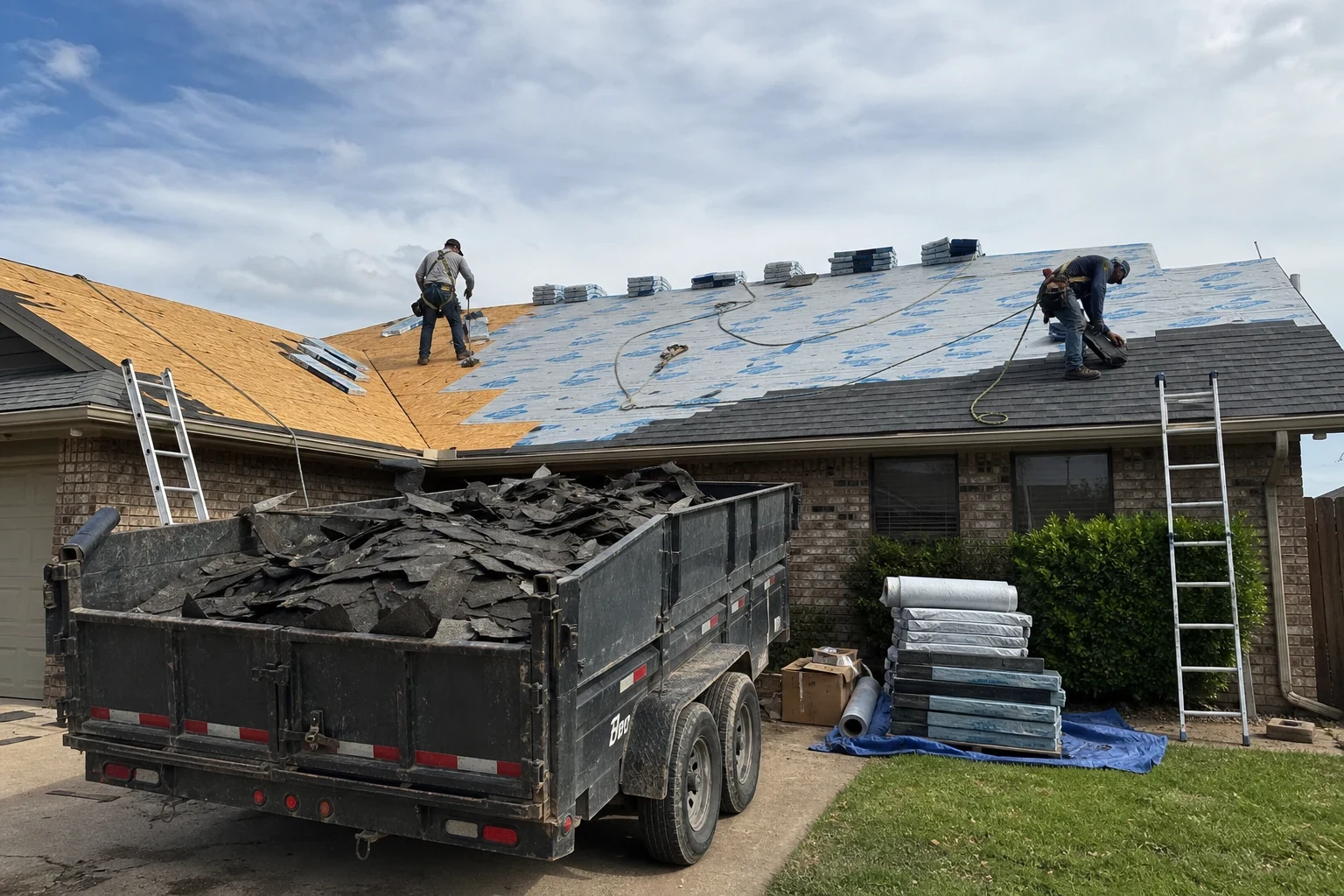
When a New Roof Is the Right Call
Most roofs don't need replacing just because they're old. We look first. If a repair will hold for years, we'll tell you that and point you to our roof repair work instead.
Replacement starts to make sense when wear shows on every slope, when the boards under the shingles flex or rot, or when hail has bruised so much of the surface that patches would just be money spent on a roof that's still failing. Past that point, each repair buys you a season, not years.
A new roof is also the cheapest time to fix how your attic handles heat. Oklahoma summers push attic temps well past what's outside. Good intake at the soffits and exhaust at the ridge moves that hot air out, so your AC works less and upstairs rooms stay closer to the thermostat.
What Comes With a New Roof
- Stripped down to the deck
- Every old shingle and all the felt come off until bare wood is showing. Roofing over an old layer covers up problems and traps heat, so we don't do it.
- Deck inspected and fixed
- With the wood exposed, we walk every section and swap out soft or rotted boards. You get photos of them before anything new goes over the top.
- Underlayment and leak barrier
- The full deck gets synthetic underlayment. Eaves, valleys and the joints where roof meets wall get a self-sealing barrier, because wind-blown rain finds those spots first.
- New flashing and drip edge
- Chimney, wall and pipe boot flashing is replaced, not reused. Fresh drip edge directs water away from the fascia.
- Balanced ventilation
- We make sure the soffit intake matches the ridge exhaust. Clogged soffits or mismatched vent styles can work against each other, and we correct that while the roof is off.
- Cleanup and walk-through
- Beds get tarped, magnets go over the lawn and drive, and the debris leaves with us. We finish by walking the roof with you.
How to Tell a Roof Is Worn Out
Sand-like specks in the gutters
The coarse coating on asphalt shingles is what blocks the sun. Once it starts washing out with the rain and pooling at the bottom of a downspout, the asphalt below is going bare and will age fast.
Edges lifting and cracking
When shingle edges cup upward or split on slope after slope, the material has dried out. A strong gust can then peel them back.
A spongy feel or a dipping ridge
Decking that gives underfoot, or a ridge line that sags in the middle, usually means the wood is damaged. New shingles alone won't fix that.
Leaks that keep moving around
A single drip is a repair job. Fresh leaks showing up in new rooms each year tell us the whole roof is wearing out.
An attic you can't stand in come July
If the attic air hits you like a furnace, airflow is likely poor. That heat bakes the shingles from underneath and keeps your AC running longer.
What Moves the Price
Every roof is priced on its own, so we don't quote numbers until we've seen it. The written estimate shows each part so you know where the money goes. Here's what makes the biggest difference.
Roof area and steepness
A bigger roof takes more bundles and more hours on the deck. A steep pitch means harnesses, roof jacks and slower going, and that adds labor.
Layers and decking
Two old layers cost more to tear off than one. Rotted decking is replaced by the sheet, and we show you each one.
Shingle choice
Standard architectural shingles, impact-rated shingles and lighter, reflective colors all price differently. We'll explain what each does for hail and for heat.
Ventilation and flashing work
Adding ridge vent, opening blocked soffits or rebuilding a chimney flashing adds to the job, but it's the work that pays back in a cooler attic.
How the Job Runs
- 1
Look and measure
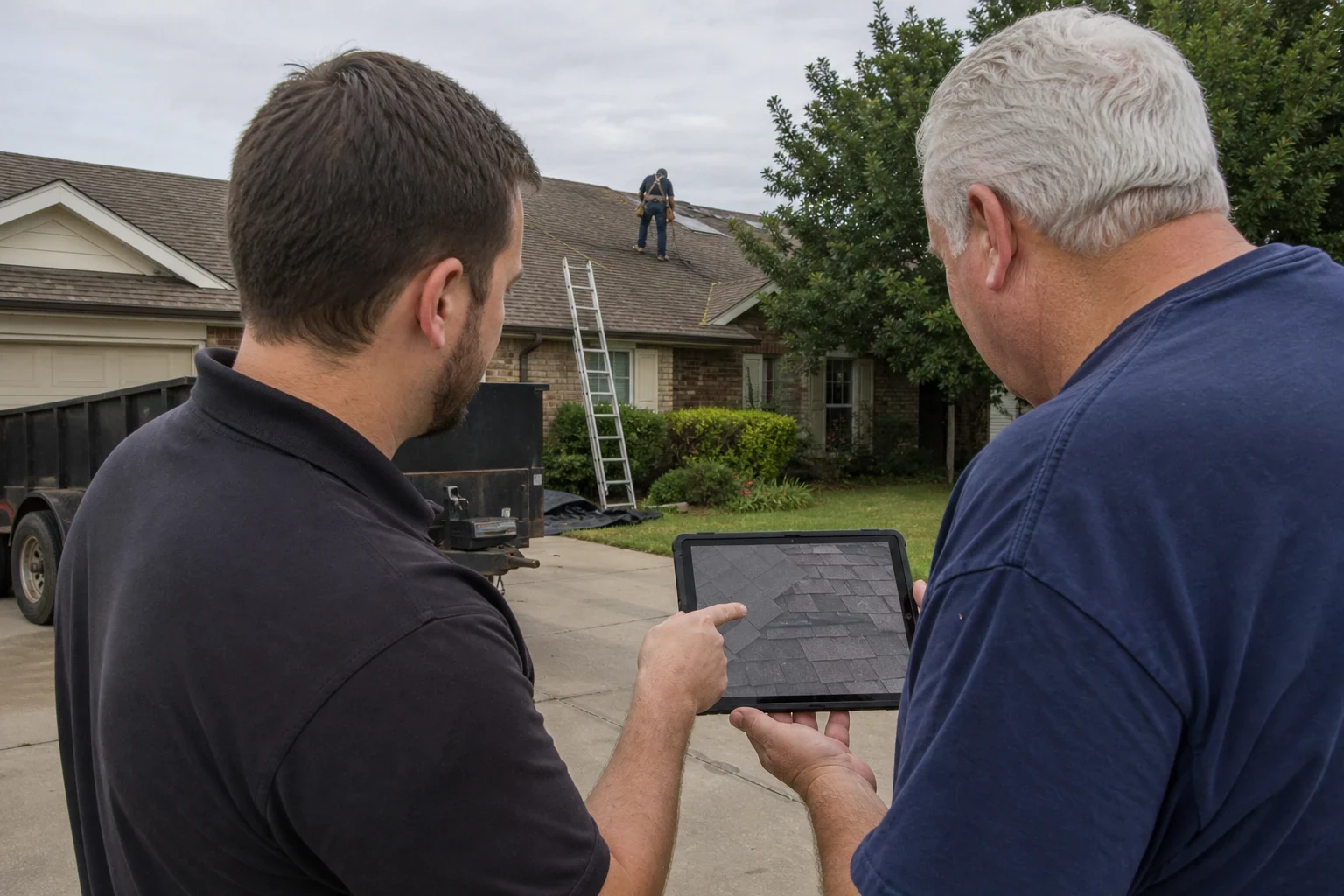
We go up, check the shingles, flashing and vents, and look in the attic if we can. We tell you plainly whether it's a repair or a replacement.
- 2
Written scope and price
You get a line-by-line estimate covering tear-off, materials, ventilation and any decking allowance. If insurance is involved, we explain how the claim usually goes, but your adjuster makes the call.
- 3
Permit and scheduling
We pull the permit where it's required and set a start date. Before we come, we let you know where the dumpster goes and what to move.
- 4
Tear-off and build
Most homes are torn off and dried in on day one, so your house isn't left open overnight. Shingles, flashing and vents go on after that, often wrapping up in a day or two.
- 5
Cleanup and walk-through
We sweep for nails, clean the gutters of debris and walk the finished roof with you.
Roof Replacement Questions
Can't you just put new shingles over the old ones?
We don't. A second layer hides soft decking and holds heat against the new shingles, which shortens their life. Tearing off lets us see the deck and fix it.
Will a new roof really lower my cooling bills?
It can help, mostly through ventilation. A balanced intake and ridge exhaust pulls hot air out of the attic so less of it soaks into your ceilings. Lighter or reflective shingles help some too. We won't promise a number, because insulation and your AC matter as well.
How long will my home be torn up?
Most replacements take one to three days. We dry the roof in each day before we leave, and the yard gets cleaned each evening. You can stay home the whole time.
Hail hit my roof. Should it be replaced through insurance?
Maybe. We'll look, take photos and tell you whether the damage is real and how widespread it is. You file the claim and the adjuster decides. Our storm damage repair page covers this in more detail.
Should I replace my gutters at the same time?
If they're bent, pulling away or undersized, it's a good time, since the drip edge and fascia are already exposed. If they're sound, we leave them and just clean them out.
Find Out If It's Time for a New Roof
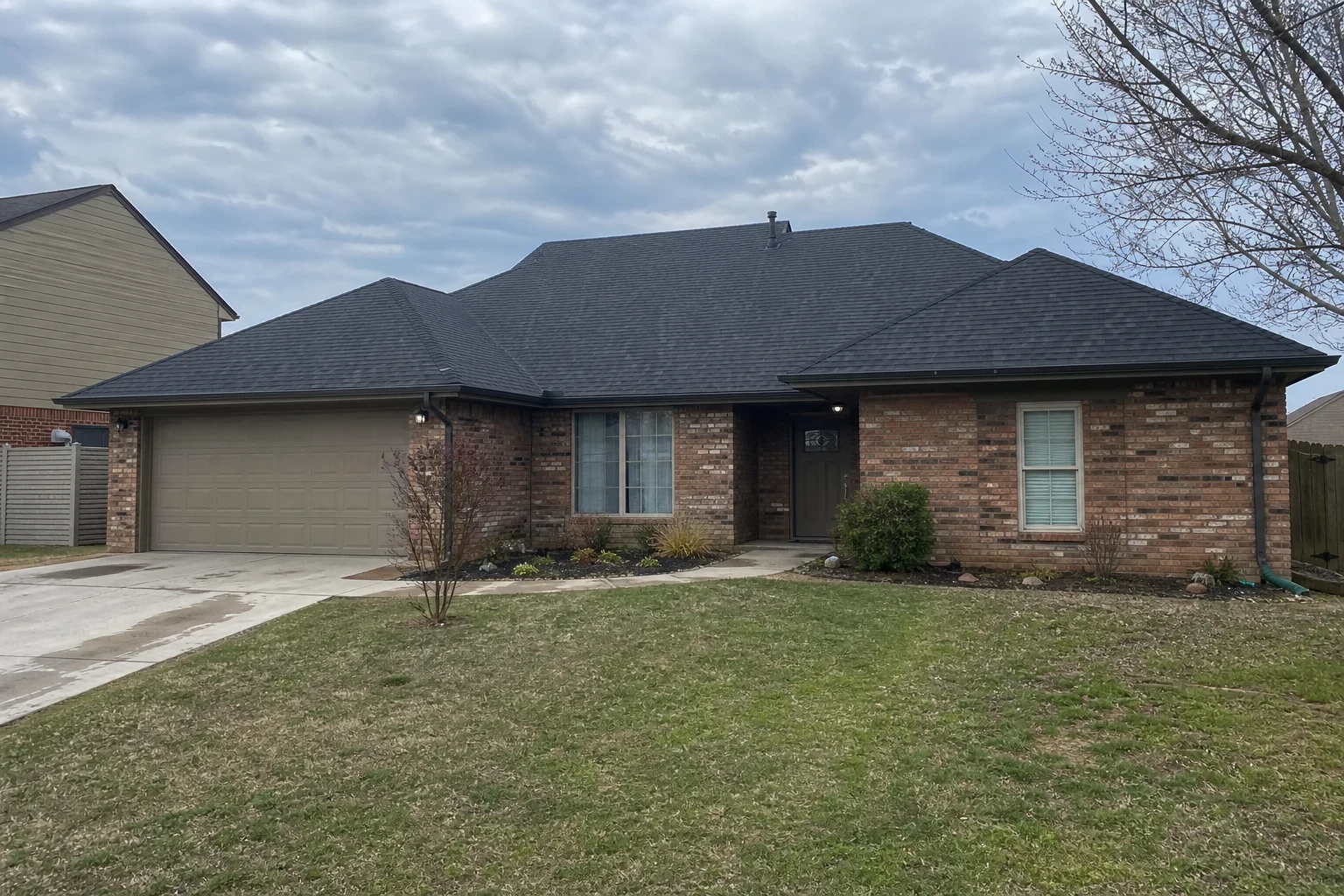
We'll look at your roof and attic, tell you straight whether it needs replacing, and lay out the job on paper.