ServicesRoof Repair
Roof Repair in The Village, OK
A small leak rarely stays small. We find where the water actually gets in, fix that spot with the right materials, and check the attic below so damp insulation or a bad vent isn't quietly raising your energy bill.
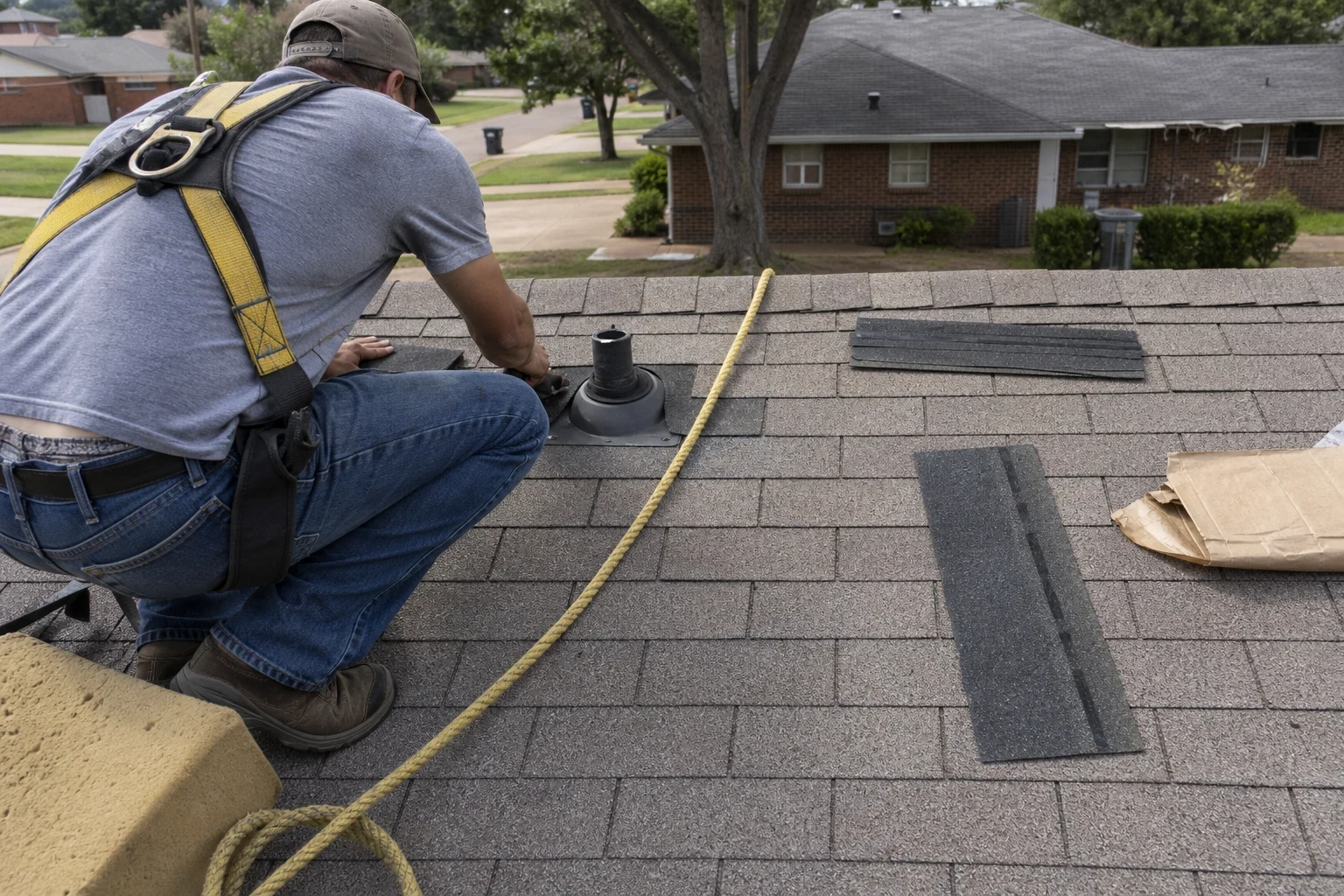
Fix the Problem, Not the Whole Roof
Most roofs that leak don't need replacing. They need one thing done right: a cracked pipe boot swapped, a flashing seam resealed, a handful of shingles put back after a wind gust. Roof repair is the right call when the rest of the roof still has life in it.
Water also travels. It can enter near a chimney and show up on a ceiling ten feet away. So we trace it from the inside and the outside before we touch anything. That way you pay for one repair, not three guesses.
There's a comfort side to this too. Wet insulation stops insulating, and a damaged vent can trap summer heat in the attic. When we fix a leak, we look at both, because that's where a roof problem turns into a running cost.
What We Handle on a Repair Visit
- Finding the leak
- In the attic we look for stains, wet decking and soaked insulation, then line those up with the spot on the roof above. You get photos from both sides.
- New shingles where needed
- We swap out missing, cracked or lifted shingles and nail them the right way. We get as close to your color and style as today's products allow, and we tell you first if it won't be a perfect match.
- Flashing and seals
- Most leaks begin at chimneys, walls, skylights and valleys. We reseal or replace the flashing there rather than covering the trouble with roof cement.
- Vents and pipe boots
- After a few Oklahoma summers, rubber pipe boots split. We replace worn boots and broken vents so your attic stays dry and keeps its airflow.
- Patching the decking
- Plywood that stays wet goes soft and won't hold a nail. We cut out the bad section and fasten new sheathing in its place, since shingles can't hold on to rotted wood.
- Heat and moisture in the attic
- We check the insulation around the leak and how air moves through the attic. If the insulation is wet or vents are clogged, we explain in plain terms how that affects comfort and cooling bills.
When It's Time to Call About a Repair
Water marks overhead
Yellow-brown spots or paint that puckers on a ceiling tell you water has been coming in for some time. The roof usually let it through weeks before the mark appeared.
Shingles on the ground
After a windy spring day, check the yard. A few shingles on the grass means bare spots on the roof that rain will find.
Granules in the gutters
Shingles shed their gritty coating as they wear or take hail. A heavy pile in the gutters or at the downspouts is worth a look.
Upstairs runs hot
If one room or the top floor stays warm no matter what the thermostat says, a blocked vent or wet insulation may be part of it.
Musty attic smell
Damp, stale air in the attic often points to a slow leak or poor ventilation. Both can lead to mold and rotted decking.
What Moves the Price of a Repair
Every repair is priced on what we actually find, so we don't quote a number over the phone before seeing the roof. A few things decide most of the cost. We'll explain which ones apply to your home before any work begins.
Size and spread of the damage
Ten shingles is a different job than a whole slope. Hidden damage under the surface can widen the scope too.
Roof pitch and access
Steep roofs and second stories need more safety gear and more time. Easy, low-slope ranch roofs cost less to work on.
Condition of the decking
If water has rotted the wood underneath, that section has to come out and be replaced before new shingles go on.
Materials and matching
Some shingle styles are discontinued or harder to find. Specialty flashing around chimneys or skylights also adds material and labor.
How a Repair Job Goes
- 1
You call and describe it
Tell us what you're seeing and where. We set a time to come out that works for you.
- 2
We find the source
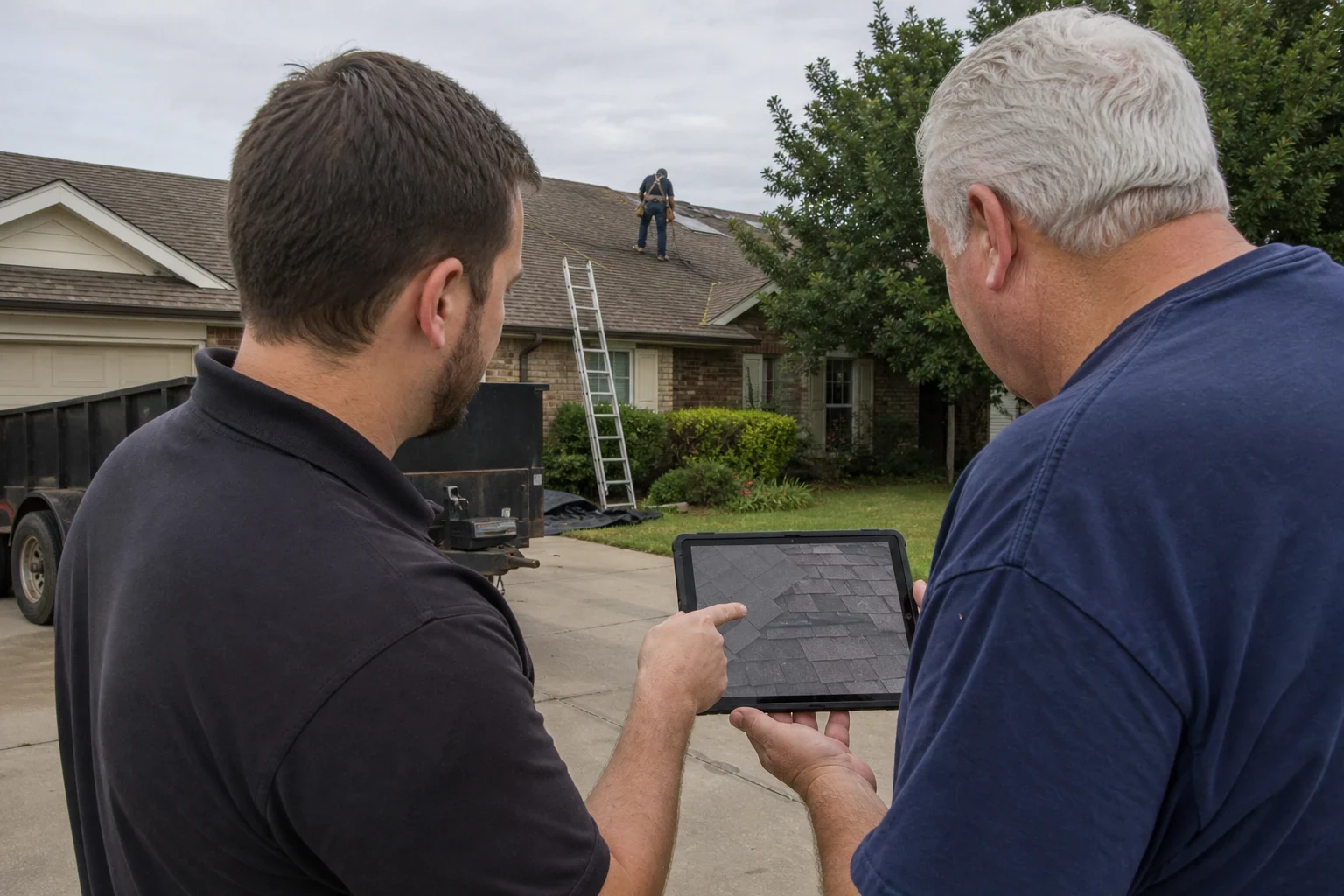
We go into the attic and up on the roof. You get photos and a plain explanation of what's wrong and why.
- 3
You get the price before we start
We walk you through what the repair includes and what it costs. If we think repair isn't worth it on your roof, we say so and explain why.
- 4
We do the repair and clean up
Most repairs take part of a day. We cover plants below the work area, haul off the old shingles, and roll a magnetic sweeper across the lawn and drive to pick up stray nails.
Roof Repair Questions We Hear
Can you fix just the leak, or do I need a new roof?
Most of the time a repair is enough. When the shingles are worn out across the board, or the damage covers several slopes, a patch may only hold for a season or two. You'll get the photos from your roof and hear which way we'd go if it were our own house, along with the reason. If replacement makes more sense, our Roof Replacement page covers how that works.
Will the new shingles match my old ones?
We get as close as we can with what's on the market. Older roofs fade in the sun, so new shingles may look a shade different at first. We tell you before we start if a close match isn't possible.
Can a roof leak really affect my energy bill?
Yes, in a real way. Insulation that gets wet packs down and loses much of its ability to hold heat out in summer and in during winter. A cracked or blocked vent can also trap hot air in the attic, which makes your air conditioner work harder.
My damage came from hail or wind. Is that still a repair?
It can be. If the damage came from a storm and you may be filing a claim, our Storm Damage Repair page explains how we document it. We'll explain the process, but your insurance adjuster makes the coverage decision.
Do you work outside The Village?
Yes. We do roof repair in nearby towns too, including Nichols Hills, Warr Acres, Bethany and Oklahoma City. The Service Areas page lists the rest.
Stop the Drip Before It Spreads
Describe the problem on the phone and we'll pick a time to come out. You'll hear the cause and the price before anyone starts work.